
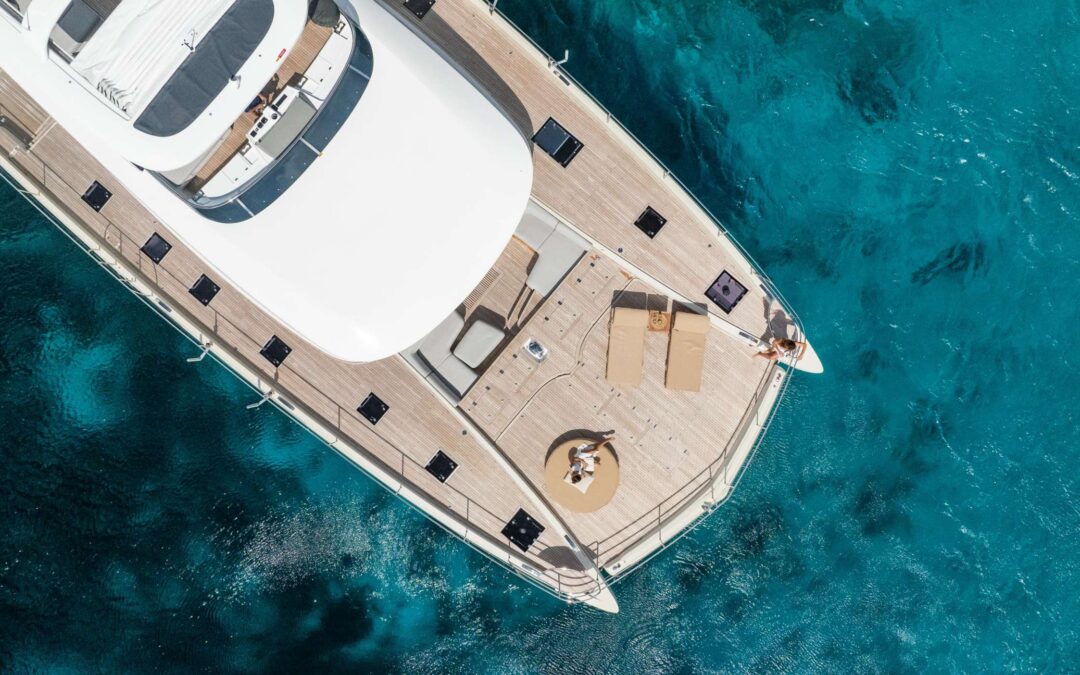
When most people plan a Caribbean getaway, they open two browser tabs. One is a hotel booking site. The other is a vacation rental app. They toggle between them for a week — comparing pools, reading reviews, squinting at photos of tile floors — and eventually pick the least disappointing option. It works. You’ll have a fine time. But there is a quiet assumption buried in that whole exercise: that those are the only two ways to see the islands.
They aren’t.
There is a third option, and once you’ve experienced it, the other two start to feel a little like settling. It’s a fully crewed luxury catamaran — a private, spacious sailing yacht with a captain and chef who handle everything, moving you from one anchorage to the next while you do exactly as much or as little as you please. No lobby. No neighbors. No single view for seven days. Just the islands, unfolding one bay at a time. At Charter Caribe, we call it Life, Underway — and this is the case for why it might be the trip you didn’t know you were looking for.
The problem with picking between a resort and a rental
Let’s be honest about what you actually get from the two familiar choices.
A resort gives you service and predictability. Someone makes your bed, there’s a restaurant downstairs, and the pool is always the right temperature. What it doesn’t give you is a sense of place. You could be at that same resort in Cancún, Cabo, or Punta Cana and barely know the difference. You’re also sharing it — the beach, the buffet, the good lounge chairs — with several hundred other people who had the same idea.
A vacation rental gives you space and privacy. You get a whole villa, a kitchen, a place to spread out. What it takes away is the service. Now you’re the one grocery shopping, cooking, cleaning up, and figuring out where to eat. And you’re still anchored — figuratively and literally — to a single location. Whatever you can see from that villa’s balcony is your view for the entire trip.
Both options force the same compromise: you’re choosing a place and staying put. The Caribbean, though, was never meant to be experienced from one fixed point. Its magic is in the variety — the way one island is a buzzing harbor town and the next is an empty crescent of sand you have entirely to yourself. A hotel or a rental shows you one frame of the film. A charter shows you the whole thing.
So what is a crewed charter, really?
This is where a lot of people hesitate, so let’s clear it up plainly. A crewed catamaran charter is a private vacation aboard a large, stable sailing yacht — our fleet runs 46 feet and up — that comes with a professional crew. At minimum that’s a captain who runs the boat and a chef who runs the galley. You and your group (typically six to ten guests) are the only passengers. The entire vessel is yours.
You don’t need to know how to sail. You don’t need to lift a line or read a chart. The crew handles navigation, anchoring, safety, and logistics. Your only job is to decide what sounds good — a snorkel before lunch, a nap on the trampoline netting, a beach bar for sunset — and let the crew make it happen.
A catamaran matters here, too. Unlike a traditional monohull that heels over as it sails, a catamaran sits flat on two hulls. It’s remarkably stable, which means more deck space, walk-around cabins, wide shaded lounging areas, and far less of the tipping motion that people worry about. It feels less like a sailboat and more like a floating boutique villa — one that happens to relocate to a new postcard every day.
It feels less like a sailboat and more like a floating boutique villa — one that happens to relocate to a new postcard every day.
A day aboard, from morning coffee to the stars
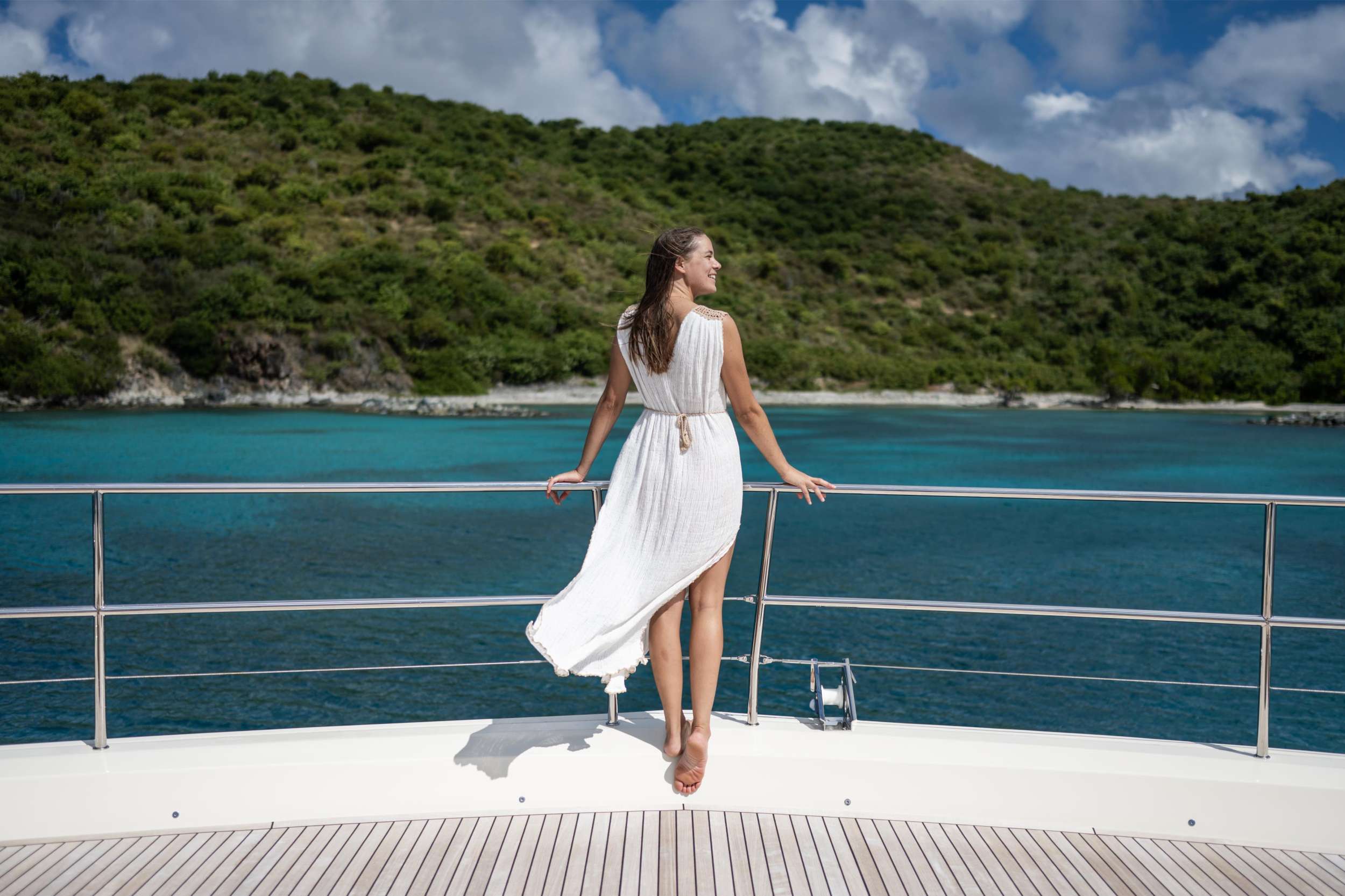
Picture it. You wake up not to an alarm but to light on the water. You pad up to the deck in bare feet, and your chef hands you a coffee made exactly how you like it — they asked on day one and remembered. Breakfast appears without you ordering it: fresh fruit, something warm, whatever your group has been raving about.
By mid-morning the captain has repositioned to a snorkeling spot most visitors never reach, because it has no dock, no road, and no way in except by boat. You slip off the back steps into water so clear it barely registers as water. Turtles, rays, a reef in full color. When you climb back aboard, there are towels and something cold waiting.
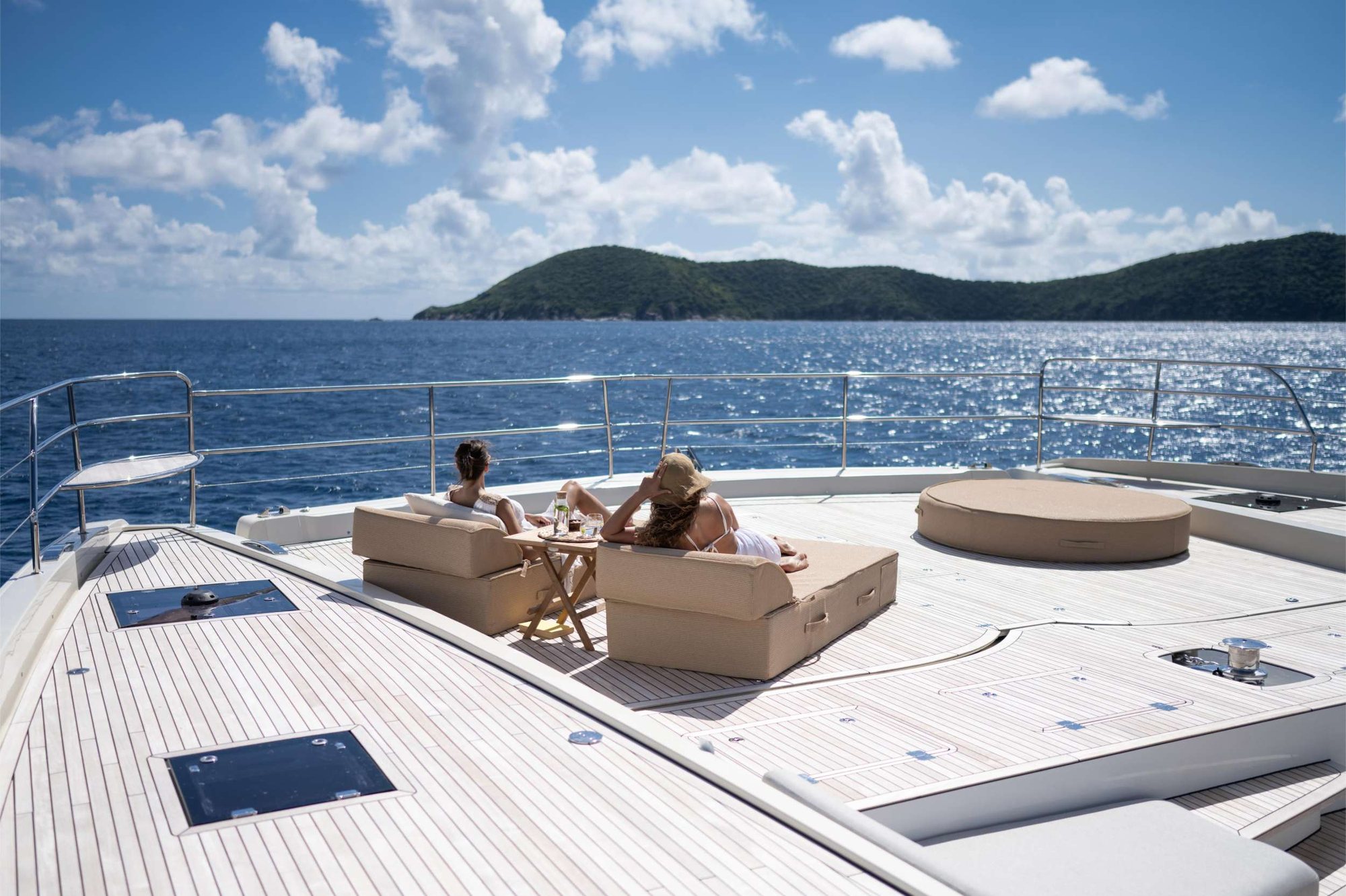
Lunch is served on deck while you’re underway to the afternoon’s anchorage. You read. You nap. Someone breaks out the paddleboards. The kids — if you’ve brought them — are having the trip of their lives, and you’re not managing a single moment of it. As the light turns gold, the crew tucks you into a protected bay, and you go ashore to a legendary beach bar, or you stay aboard for a chef’s dinner under a sky with more stars than you knew existed.
That rhythm — effortless, unhurried, entirely yours — is the thing you cannot buy at a front desk. This is what “barefoot luxury” actually means. Not a brand of sandal. A way of moving through a week.
Let’s talk about value, honestly
Here is the objection we hear most: a private yacht sounds like it costs a fortune. It’s a fair thing to wonder, so let’s actually do the math instead of hand-waving.
When you book a charter, the price covers far more than a room. It includes your accommodation, your professional crew, your chef and every meal they prepare, your snorkel gear, paddleboards and water toys, and your transportation between islands. Compare that honestly to a luxury vacation the “normal” way: a comparable suite at a high-end Caribbean resort, three meals a day for your group at restaurant prices, a private chef if you want one, watersport rentals, and — crucially — you’d need to book several resorts to see the same number of islands, plus the flights or ferries between them.
Split across a group of six to ten, a crewed catamaran frequently lands in the same neighborhood as an upscale resort stay — sometimes below it — while delivering something a resort structurally cannot: multiple destinations, total privacy, and a crew devoted entirely to your group rather than to a property full of strangers. You’re not paying a premium for a boat. You’re consolidating the cost of a much better trip into one line item.
Value isn’t only about dollars, either. It’s about what you don’t spend: the hours not lost to planning, the decisions not agonized over, the “what should we do today” negotiations that never happen because your crew has already thought three steps ahead.
Places you simply can’t reach any other way
The strongest argument for a charter is geographic. Some of the Caribbean’s best moments are, by design, unreachable from land.
In the British Virgin Islands, The Baths at Virgin Gorda — a surreal maze of house-sized granite boulders and hidden tidal pools — are at their quiet best in the early morning, before the day-trip crowds arrive by ferry. On a charter, you’re already there at dawn. A short sail away, Jost Van Dyke is home to beach bars that became famous precisely because they’re hard to get to; arriving by yacht is the way they were meant to be enjoyed.
In the US Virgin Islands — our home waters — St. John’s Trunk Bay is regularly called one of the most beautiful beaches on earth, and much of the island is protected national park you can only fully appreciate from the water. We know these anchorages the way you know your own neighborhood, because they are our neighborhood.
Sail to the Bahamas and the Exumas open up: the improbably famous swimming pigs of Big Major Cay, the underwater cathedral of Thunderball Grotto, and a chain of uninhabited cays where “your” beach for the afternoon is exactly that — yours.
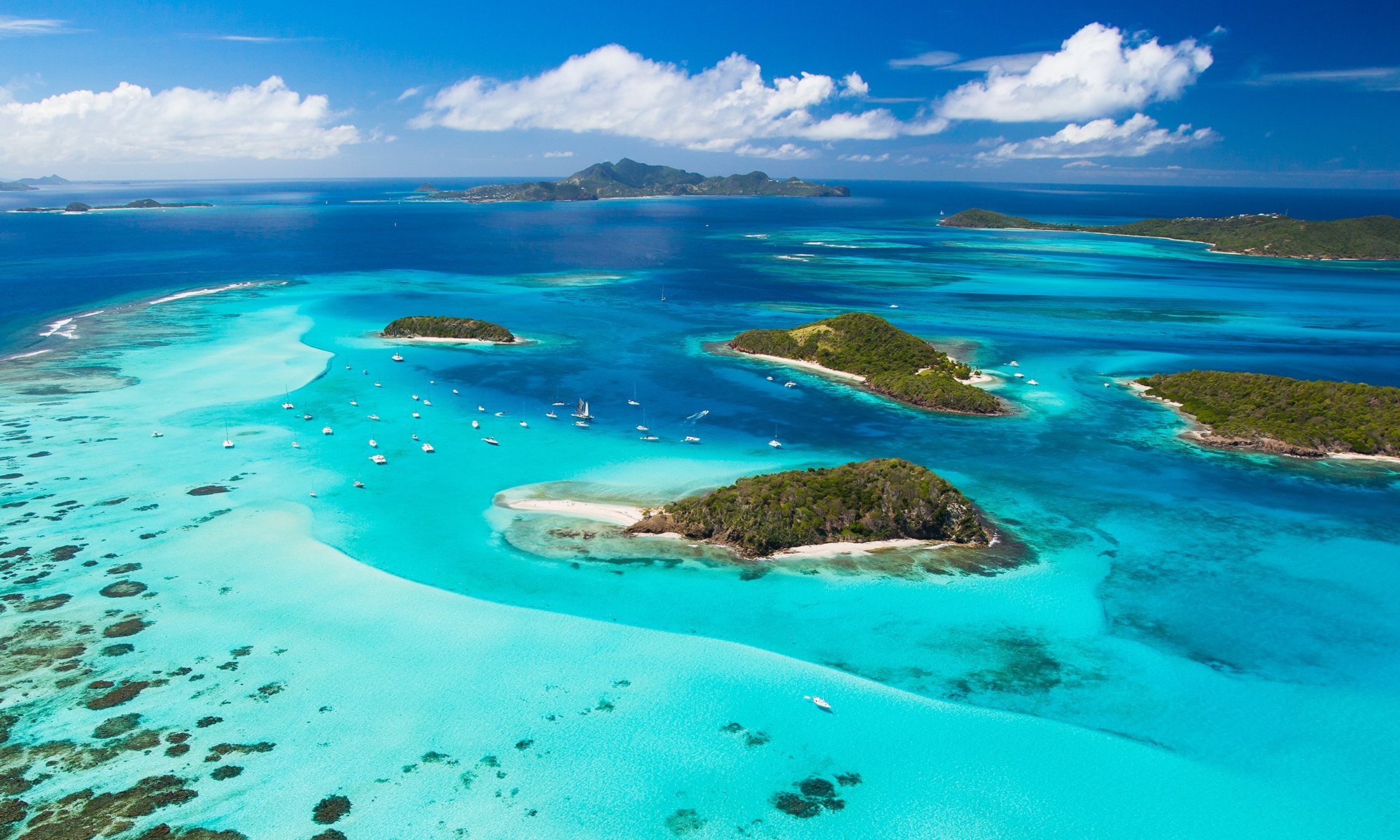
Farther south, the Grenadines hide the Tobago Cays, a cluster of tiny islands ringed by a horseshoe reef, where you anchor in impossibly blue water and swim with sea turtles over the seagrass. There is no hotel there. There is no road. There is only the boat that brought you — and that is the entire point.
“But is it really for me?”
If a small voice is still hesitating, it’s usually one of these, so let’s answer them directly.
“I’ll get seasick.” On a catamaran, at anchor in a protected bay — which is where you spend most nights — the motion is gentle. Many guests who worry about this are pleasantly surprised. Your crew also plans routes for comfort and can adjust for anyone who’s sensitive.
“We have kids / grandparents / a big mixed group.” Charters are wonderful for exactly these groups. There’s room to spread out, activities for every energy level, and a crew that quietly makes sure everyone — from the eight-year-old to the eighty-year-old — is looked after. Milestone birthdays, family reunions, multigenerational trips: this is our sweet spot.
“I don’t know anything about boats.” Perfect. You’re not supposed to. That’s what the crew is for. Your only responsibility is to relax.
“It feels intimidating to book.” It shouldn’t be, and that’s on us to make easy. We’re owner-operated, which means when you reach out, you’re talking to people who’ve spent years on these waters — not a call center. We help you choose the right yacht, shape an itinerary around what your group loves, and handle the details so that stepping aboard feels like the easiest thing you did all year.
How it actually works
Booking a Charter Caribe voyage is refreshingly human. You tell us who’s coming, roughly when, and what kind of trip you’re dreaming about — lively and social, quiet and remote, adventurous, celebratory. We match you with the right catamaran from our handpicked fleet and introduce you to your crew. Together we sketch an itinerary, though nothing is set in stone; part of the joy is waking up and changing your mind. Then you show up, kick off your shoes, and let a week of your life happen at sea level.
We’ve done this across more than 200 voyages, and our guests come back rating the experience 4.9 out of 5 — not because a yacht is a novelty, but because, once you’ve vacationed this way, the old two-tab routine never feels quite the same.
The resort will always be there. So will the rental. But the version of the Caribbean that most people never see — the empty coves, the reachable-only-by-boat beach bars, the mornings that belong entirely to you — is waiting just offshore. That’s the one we’d love to show you.
Keep exploring: The Definitive Guide to Luxury Yacht Charters · Beyond the Shore: Secret Coves · Safety at Sea: Our Fleet Standards · explore our Caribbean destinations.
Frequently Asked Questions
Is a crewed catamaran charter more expensive than a resort?
Not necessarily. A charter price includes your accommodation, a professional captain and chef, all meals, water toys and transport between islands. Split across a group of six to ten, a crewed catamaran often lands in the same range as an upscale Caribbean resort — while giving you multiple destinations and total privacy.
Do I need sailing experience to charter a yacht?
No. Charter Caribe charters are fully crewed, so the captain handles all the navigation, anchoring and safety. Your only job is to relax and decide what sounds good each day.
What’s included in a Charter Caribe charter?
Your cabin and the whole yacht, a professional crew, a private chef and every meal, snorkel gear, paddleboards and water toys, and transportation between islands — a genuinely all-inclusive week.
Where does Charter Caribe sail?
Charter Caribe is based in the US Virgin Islands and also sails the British Virgin Islands, the Bahamas (Exumas) and the Grenadines (Tobago Cays).
Will I get seasick on a catamaran?
It’s unlikely for most guests. Catamarans sit flat on two hulls and are very stable, and you spend most nights anchored in calm, protected bays. Crews also plan routes for comfort.
How many people can go on a charter?
Charter Caribe’s fleet is 46 feet and up and typically hosts six to ten guests — ideal for families, groups of friends and milestone celebrations.
Ready to trade the front desk for the foredeck? Reach out to Charter Caribe and let’s start planning your voyage. Life, Underway.